Skip to content

Technology

How a desiccant dehumidifier works

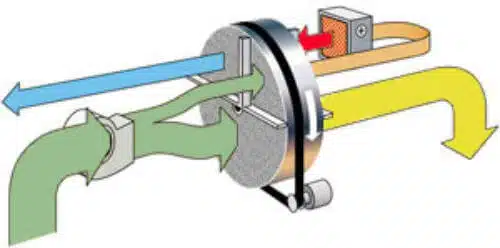
Process air passes through a slowly turning rotor and leaves drier. A separate airstream is heated, passes through another sector of the same rotor, and carries the moisture away. Consorb, Aquasorb and Recusorb are different ways of arranging those two airstreams.

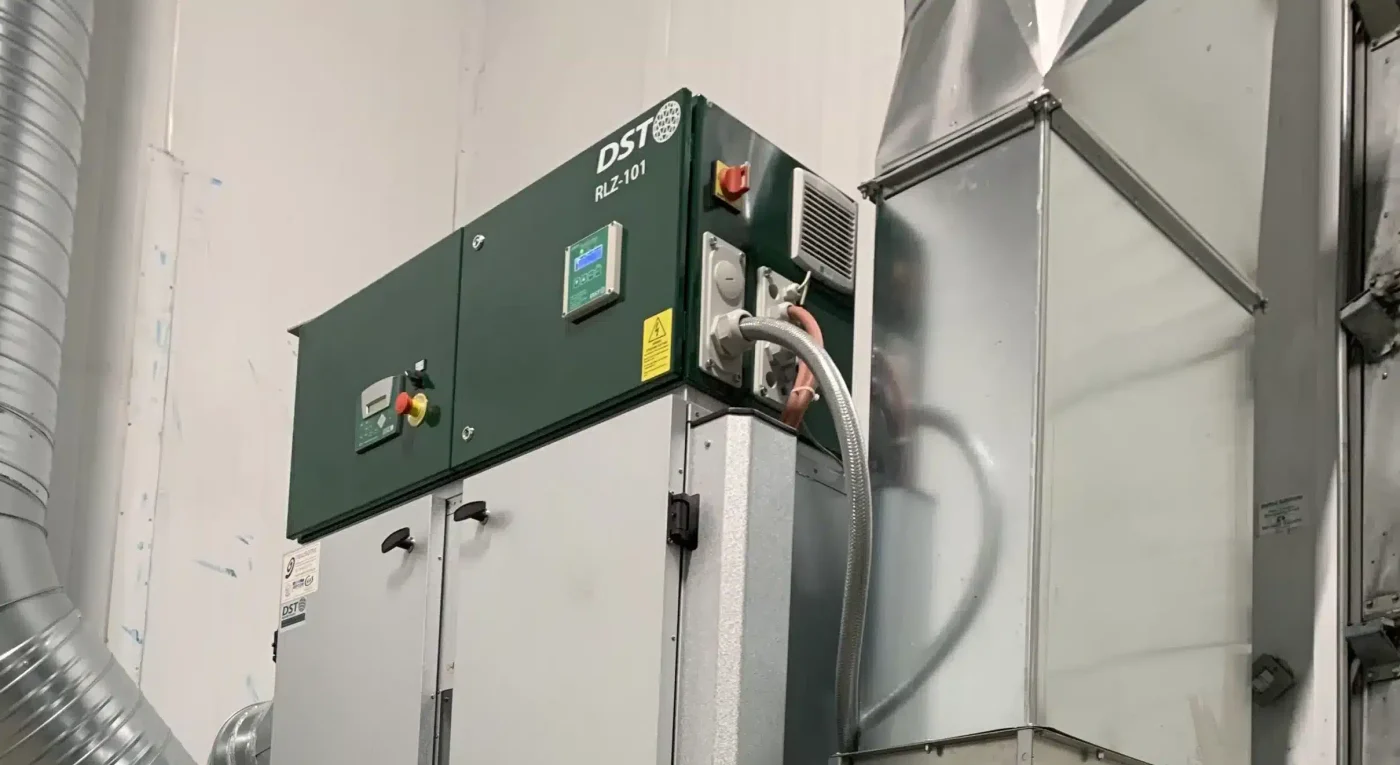
DST RLZ-101 dehumidifier with a green control panel, connected to ductwork
  • Process air

    The air you want dry. It leaves the rotor drier and warmer.

  • Reactivation air

    Heated air that drives the moisture off the rotor. It leaves warm and wet.

  • Consorb

    The simpler layout. Lower reactivation temperatures, waste heat, or very humid inlet air.

  • Recusorb

    Heat in the rotor preheats the incoming regeneration air, so the heater uses less energy and the dry air leaves cooler.

The four published layouts

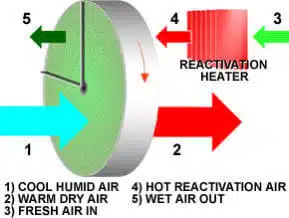
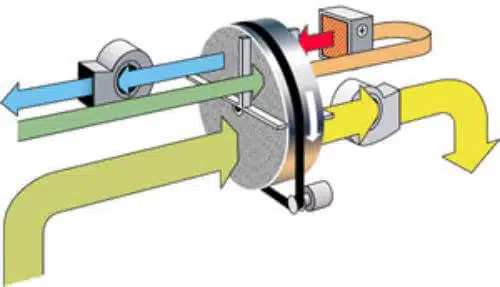
The rotor principle is the same. The drawings show how the fans, the heater and the wet air are arranged.

Diagram of a rotor, a reactivation heater, cool humid air in, warm dry air out, and wet air exhausted

Consorb

The simpler layout, also used by other makers. Process air and reactivation air each have their path through the rotor. DST uses it where the reactivation temperature can be lower, where waste heat is available, where the inlet air is very humid, or where the dry process air is recirculated in a closed system.
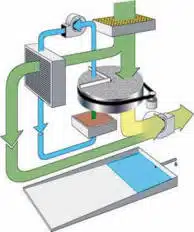
Cutaway of a rotor with a condenser, a single fan, and condensate collecting in a tray

Aquasorb

Consorb airflow plus an air-cooled condenser, so the moisture in the wet air condenses and can be drained. One centrifugal fan supplies both the dry air and the cooling for the condenser. DST states that the energy put in ends up in the dry-air outlet. It is used where a reactivation duct to outside is impractical.

Cutaway of a rotor with separate process and reactivation fans and a heater

Recusorb R, RL and RZ

Internal heat recovery. Heat left in the rotor preheats the incoming regeneration air and reduces the heater energy. The process air leaves cooler and drier than it would from other desiccant layouts. DST uses this on most of its units, in open or closed systems. The drawing shows a process fan and a separate reactivation fan.

Cutaway of a rotor with one fan serving both airstreams, plus a reactivation heater

Recusorb DR

The same internal heat recovery as Recusorb R, with one fan pushing both airstreams. Dry fresh air is delivered into a process, or into an open total-loss duct that runs into the object being dried.

What the rotor is doing

The sector split and the speed are the same idea on each layout.

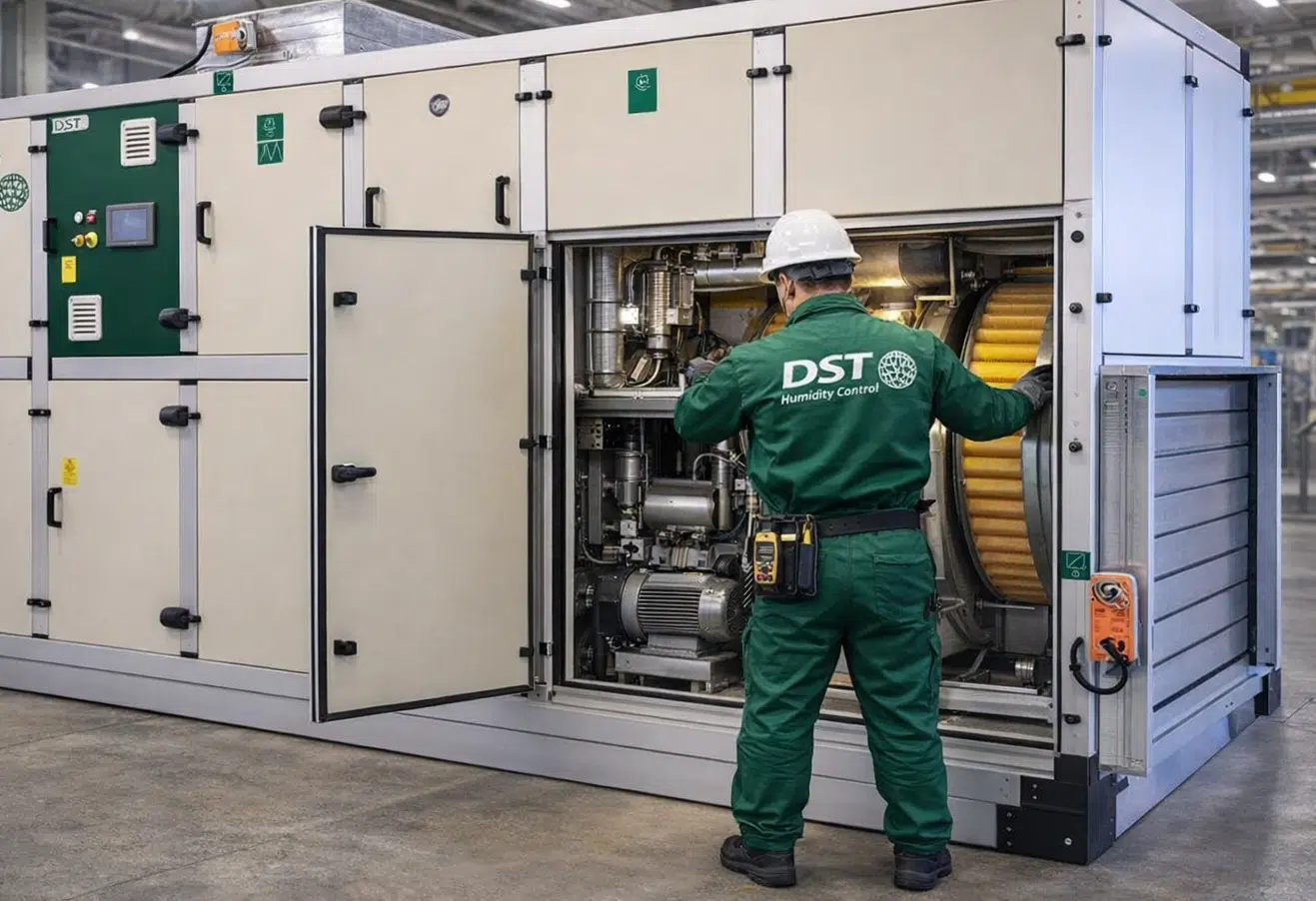
Engineer in green DST overalls with the door of a DST dehumidifier open, showing the rotor
  • Two sectors

    Typically about three quarters of the face for process air and one quarter for reactivation, with seals between them.

  • Slow rotation

    About 8 to 12 revolutions an hour, so each channel spends long enough in the process air and then in the hot air.

  • The D-Max rotor

    The silica gel is chemically bonded to the matrix. Life, washing and the other variants are on the D-Max page.

From the explanation to a unit

These notes describe the method. A sale or a hire is a separate conversation, matched to the site.

  1. I need help choosing

    Describe the space, the temperature and any humidity or dew point you already know.

    Ask about a duty
  2. How it is ducted

    The eight stand-alone arrangements, including which ones are Consorb, Recusorb or DR.

    See installation examples
  3. I would rather call

    Our office number is 01422 312 562, Monday to Friday, 8.30am to 5.00pm.

    Call 01422 312 562

Questions

Where does the moisture go?

Into the heated reactivation air, which is ducted outside, except on Aquasorb, where that moisture is condensed and drained.

Why is Recusorb the usual choice?

DST uses the heat-recovery layout on most of its units because the dry air leaves cooler and drier, and the heater uses less energy. Consorb is kept for waste heat, very humid air, or a closed recirculation.

What is the difference between Recusorb and Recusorb DR?

Both recover heat inside the rotor. DR uses one fan for both airstreams and is the layout drawn for dry fresh air into a process or an object.

Describe the condition you need

Temperature, the space, and any humidity or dew point you already know.

Or call 01422 312 562

Monday to Friday, 8.30am to 5.00pm