

Visible and hidden problems
Drips, slip hazards and wet packaging are obvious. Clumping, sticking, corrosion and hygiene issues can be quieter until scrap or downtime rises.
Applications
Factories generate moisture from steam, wash-down, processes, people and outside air. Condensation on cold surfaces, damp product and unstable process conditions follow. Desiccant drying is used where the temperature or the target humidity sits beyond a cooling dehumidifier.

Many moisture sources
Steam, cleaning, open vessels, compressed air and door infiltration all add vapour.
Condensation risk
Warm damp air on cold pipework, roofs or equipment leaves water where people walk and product sits.
Process consistency
Powders, films, adhesives and food lines can drift when the room humidity drifts.
Sized from the load
A unit is chosen from moisture load and the condition to hold, not from floor area alone.
The first step is to understand where vapour enters and which surfaces or products fail when it does.
Drips, slip hazards and wet packaging are obvious. Clumping, sticking, corrosion and hygiene issues can be quieter until scrap or downtime rises.
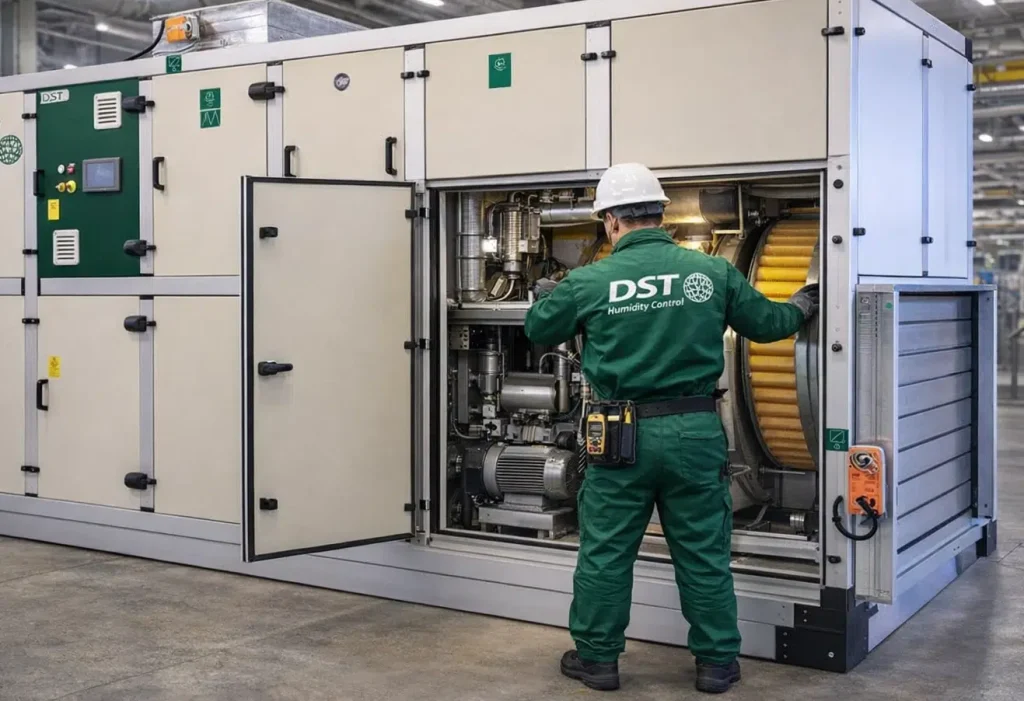
Warm rooms with moderate targets may suit a cooling unit. Cooler spaces and lower dew points usually need a desiccant rotor. Some sites combine both.
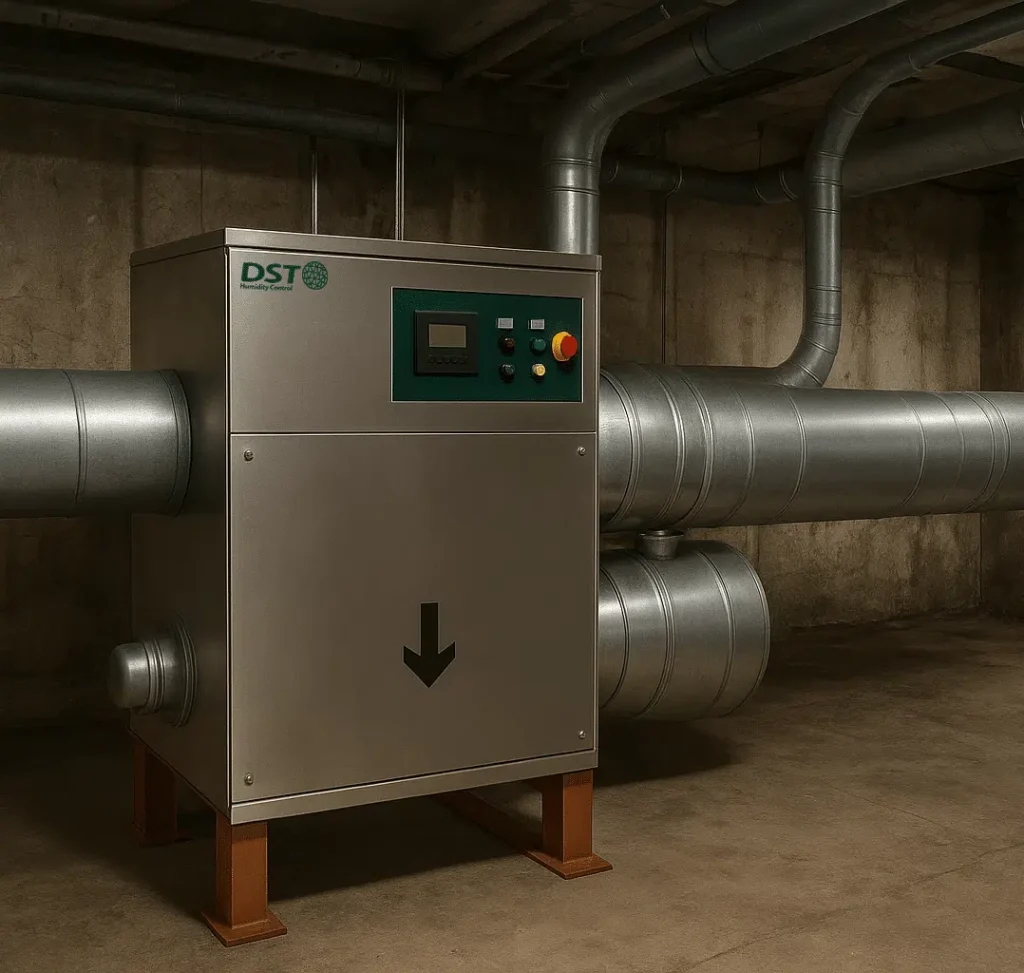
Capacity alone is not enough. Dry air has to reach the wet pockets. Ducted discharge or careful unit placement is part of the job.
These notes describe the application. A sale or a hire is a separate conversation, matched to the site.
Describe the space, the temperature and any humidity or dew point you already know.
Get adviceA common factory problem: condensation on moulds and moisture in resin.
Read about plasticsOur office number is 01422 312 562, Monday to Friday, 8.30am to 5.00pm.
Call 01422 312 562The vapour that must be removed continuously: from processes, people, building fabric and outdoor air entering the space.
No. Temperature and the humidity or dew point to be held determine whether cooling, desiccant or a combined arrangement is appropriate.
Room temperatures, a brief process description, wash-down practice, door openings, and the current failure mode: condensation, clumping, mould or corrosion.
Tell us about the space, the temperature, and any humidity or dew point you already know.
Or call 01422 312 562
Monday to Friday, 8.30am to 5.00pm