
Applications
Water Damage
After a flood or leak, large amounts of water stay hidden in floors, walls and contents. Drying time holds up reinstatement and raises mould risk. Desiccant units supply warm dry air at high airflow so buildings can be dried for hire and restoration work.
-
Hidden water
Litres remain in structure and contents after the visible flood is gone.
-
Mould risk
High humidity after wetting favours mould within days if drying is slow.
-
Hire use
Restoration firms use portable desiccant units where speed and deep drying matter.
-
Warm dry air
Desiccant process air leaves warm and dry, which helps drive moisture out of fabric.
Drying after water damage
The aim is to pull vapour from wet materials into the air, then remove that vapour continuously.
-
Why time matters
Remedial building work cannot start until the structure is dry enough. Delays raise cost and secondary damage.
-
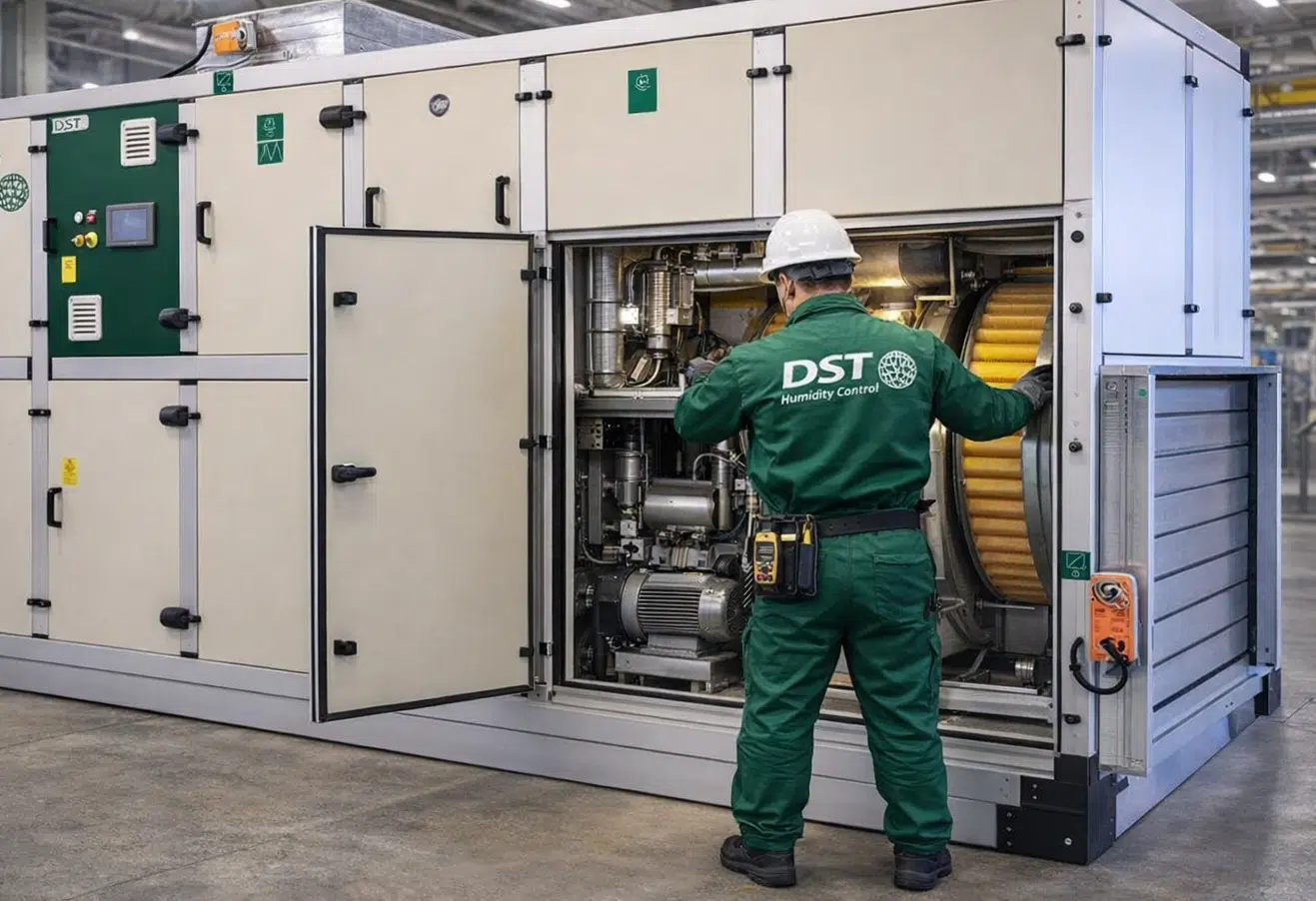
Why desiccant is used
Cool buildings and thick wet materials need dry air that still works when temperatures are low. Cooling dehumidifiers lose output in those conditions.
-
Rental companies
Hire fleets place units, ducting and fans to create airflow through wet zones until moisture readings allow reinstatement.
-
What to tell us
Building type, how wet it is, power available, and whether you need sale, hire or advice on a drying plan.
From the application to a unit
These notes describe the application. A sale or a hire is a separate conversation, matched to the site.
-
I need help choosing
Describe the space, the temperature and any humidity or dew point you already know.
Get advice -
Dehumidifier sales
DST supply when you need a unit permanently rather than on hire.
Go to dehumidifier sales -
I would rather call
Our office number is 01422 312 562, Monday to Friday, 8.30am to 5.00pm.
Call 01422 312 562
Questions
Is water-damage drying limited to flood events?
Floods, burst pipes, roof leaks and firefighting water all leave the same drying problem in the building fabric.
Are hire dehumidifiers available for water-damage work?
DST equipment is available through hire as well as sale. Describe the building and the appropriate route can be confirmed.
Is natural ventilation an alternative to mechanical drying?
Outside air may itself be humid. Controlled dry airflow removes vapour faster and more predictably than passive drying.
Get advice
Tell us about the space, the temperature, and any humidity or dew point you already know.
Or call 01422 312 562
Monday to Friday, 8.30am to 5.00pm