
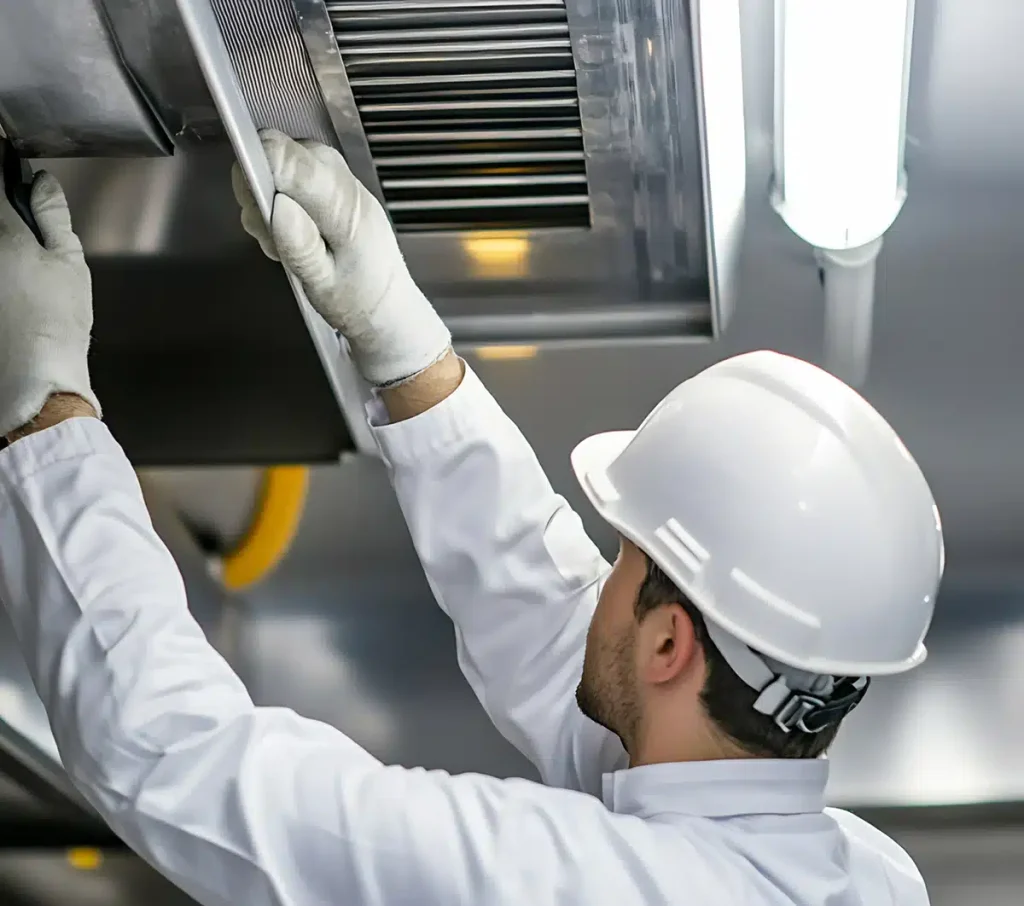
Main components
Filters, fans, belts, bearings and the desiccant rotor. Restriction, wear and a drop in performance are recorded and dealt with on the visit, or booked as a follow-up repair.
Discuss servicingUK industrial dehumidifier servicing
Industrial dehumidifier servicing is the scheduled visit: filters, fans, the rotor, heaters and the controls, plus cleaning and a report. Newsome services DST dehumidifiers and units from other manufacturers, including older and bespoke systems, with engineers across the UK.

Set to the machine
Desiccant, refrigeration or a specialist dryer, against the way that unit is built.
The core components
Filters, fans, belts, bearings and the desiccant rotor on a desiccant unit.
A report after the visit
Condition, work done, and what should be planned next.
Booked to the site
Intervals can follow running hours, production, the season or a standard the site already uses.
Say how many units you have and how they are used. Choose Service or maintain existing equipment. If you want the wider planned programme, including callouts and parts, say that you mean maintenance. We reply during opening hours.
Or call 01422 312 562
Monday to Friday, 8.30am to 5.00pm
Each visit is matched to the type of system. The checks below are the published servicing list.
Filters, fans, belts, bearings and the desiccant rotor. Restriction, wear and a drop in performance are recorded and dealt with on the visit, or booked as a follow-up repair.
Discuss servicing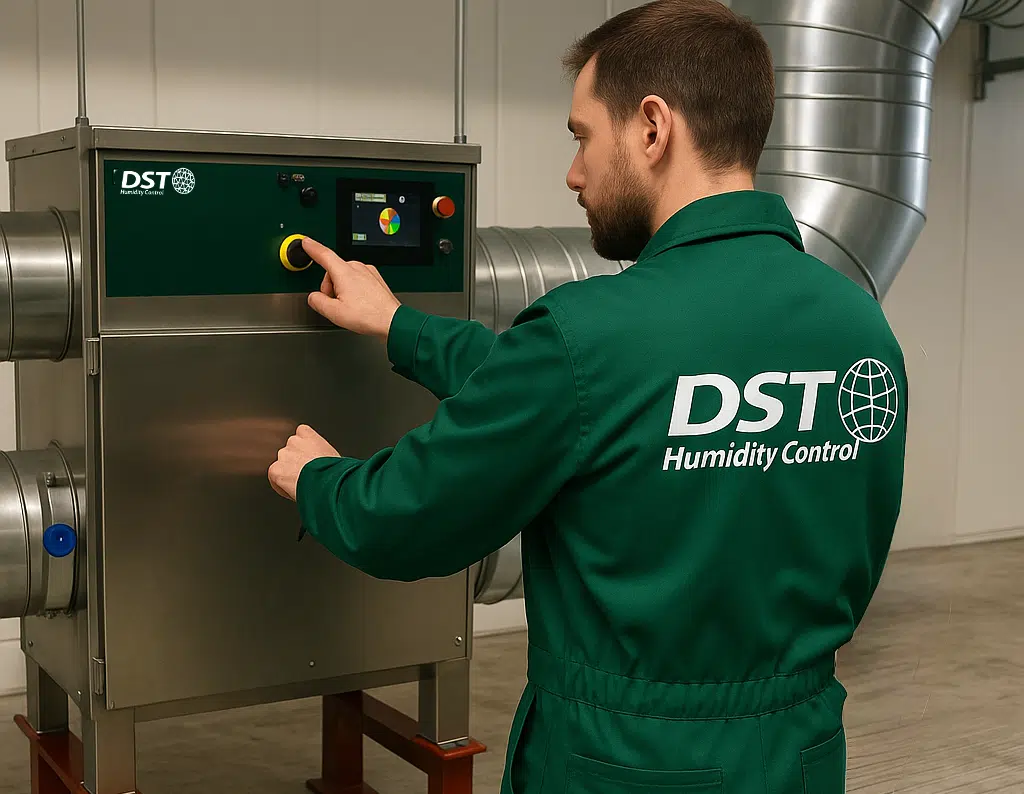
Electric, steam, gas or hot water heaters, checked for temperature and for a safe response to the controls. A heater that is low changes how much moisture the rotor can take out.
Discuss servicing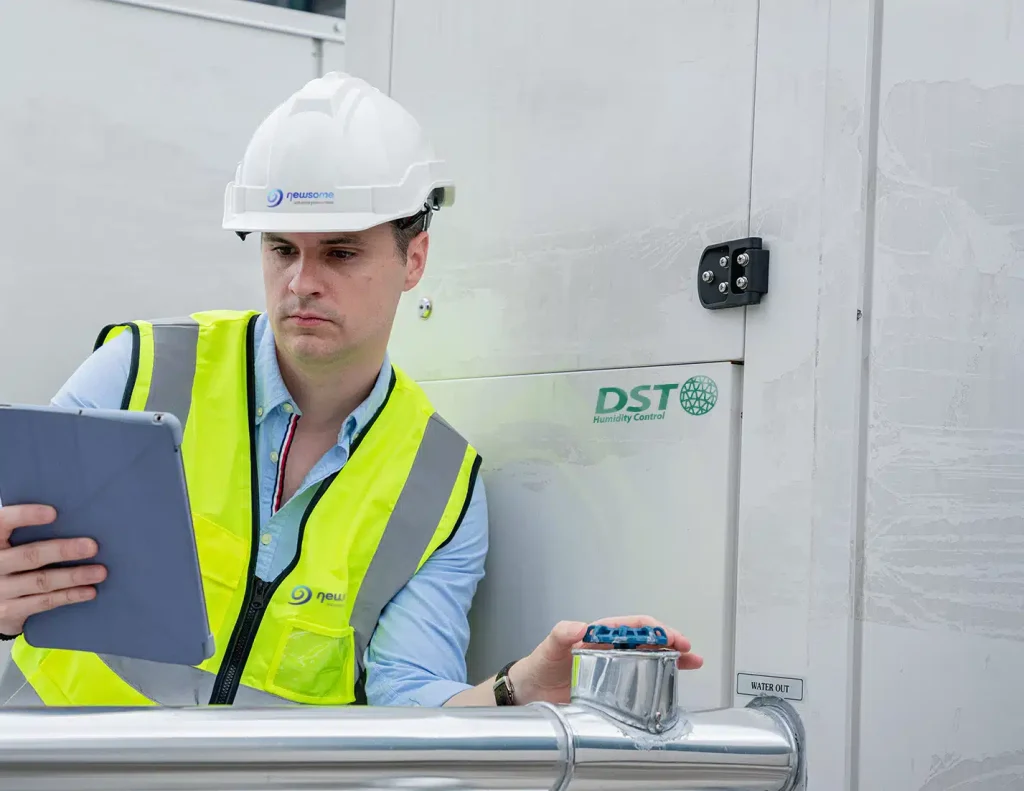
Sensors, wiring, PLC panels and safety devices. On a unit connected to a building-management system, the signals and the control response are checked against the settings.
Discuss servicing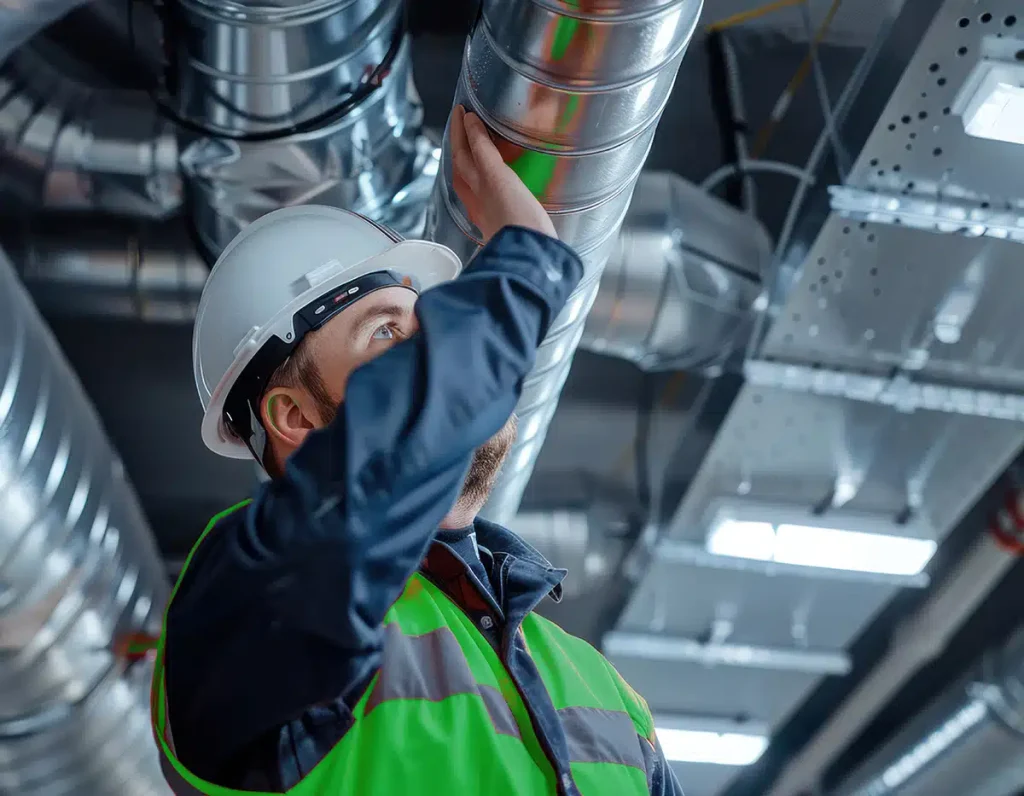
Air volumes, ductwork that can be reached, and the temperature change across the system. Those readings show whether the unit is still drying as expected.
Cleaning covers the housing, the airflow path, sensors, fans and heat exchangers, where dust would otherwise sit on the parts that measure and move the air.
Discuss servicingMany sites book visits through the year rather than calling when something is already wrong.
Running hours, the production cycle, the season, or a standard the industry already uses. The schedule is agreed with the site.
Condition, work carried out and recommendations. Sites use the reports for records, compliance and planning the next visit.
Wear found on a service can be repaired on the same visit or booked as a follow-up. On a site with several units, the reports build a picture of which parts are due.
Rotor condition, electrical parts, seals and heater assemblies on equipment that has been in place for more than ten years. The report can recommend an upgrade, a part, or a point where replacement is the better outcome.
The national service desk books the visit and confirms what the engineer is coming to do. Account managers and engineers cover Scotland, the North, the Midlands, Wales, the South West and the South East.

Food production, pharmaceutical sites, engineering, warehouses, cold stores, printing, packaging, plastics and research. The checks follow the moisture load and the process, not a single checklist for every building.
Rotor design, airflow, controls and reactivation differ by manufacturer. The visit uses the procedure that matches the unit.
Servicing is the scheduled check. Maintenance is the wider programme, including parts and callouts. A repair is the work when a component has failed.
Servicing sits between a planned maintenance agreement and a repair call. Purchase and hire are separate conversations.
Inspections, parts, callouts and upgrades, as well as the checks on a service visit.
Read about maintenanceDiagnosis, replacement parts and temporary cover when the process cannot stop.
Read about repairsIf the unit cannot run while parts are sourced, industrial dehumidifier hire can cover the duty.
Go to dehumidifier hirePermanent supply is handled under industrial dehumidifier sales.
Go to dehumidifier salesSend the equipment details, or call 01422 312 562.
Discuss servicingServicing is the scheduled visit: components, heaters, controls, airflow, cleaning and a report. Maintenance is the wider programme, including planned visits, spare parts, callouts and upgrades. Many sites use both.
Yes. The published servicing work covers DST, other manufacturers, older units and bespoke drying systems.
A report of the condition, the work carried out and recommendations for the next period. That is the record for the site team.
Tell us the units and how often you want them looked at.
Or call 01422 312 562
Monday to Friday, 8.30am to 5.00pm