
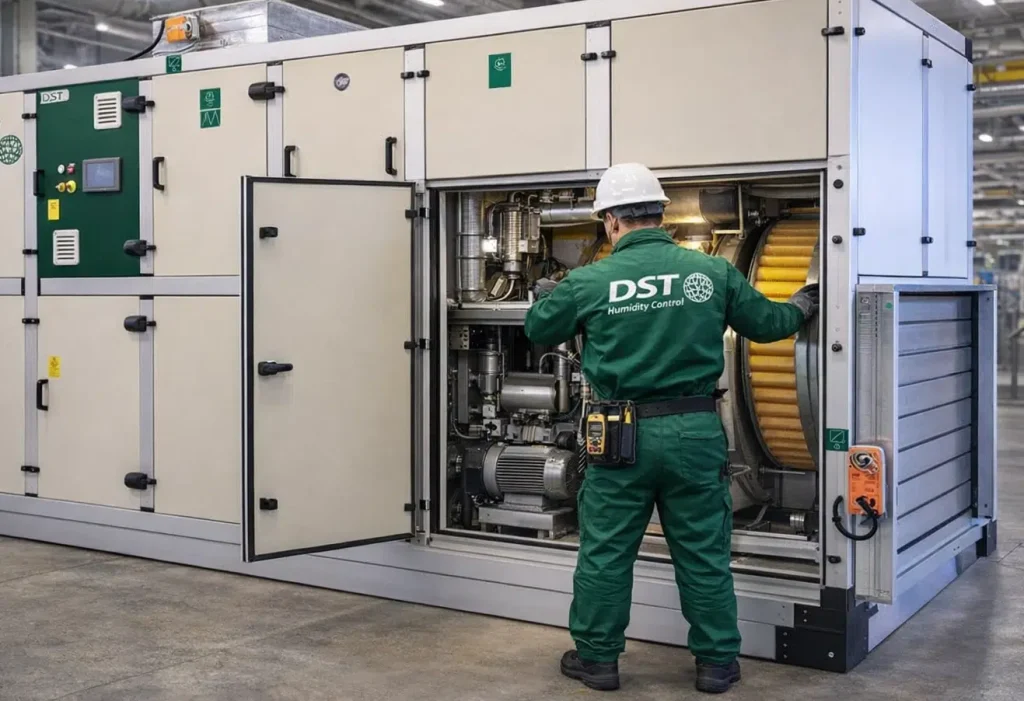
Dehumidification
Removing water vapour from air so a room, a store or a process holds a chosen humidity. High humidity is what leads to condensation, corrosion, mould and damage to stored goods.
Read about dehumidificationHow DST dehumidification works
Psychrometry is the study of air and the water vapour mixed with it. These notes cover that ground in practical terms: what dehumidification is, how humidity is described, what the D-Max rotor does, and when a desiccant unit is chosen instead of a cooling dehumidifier.
Air and water vapour
The terms and the chart used to describe a humidity duty.
A desiccant rotor
DST industrial units use the D-Max silica gel rotor.
Cooling or desiccant
A cooling dehumidifier and a desiccant unit are for different conditions.
Three DST principles
Consorb, Recusorb and Aquasorb move the regeneration air in different ways.
If you have a building or a process in mind, describe it here. Choose Help choosing a solution. We reply by phone or email during opening hours, Monday to Friday, 8.30am to 5.00pm.
Or call 01422 312 562
Monday to Friday, 8.30am to 5.00pm
The nine subjects published under Technology. Each one is a separate page.
Removing water vapour from air so a room, a store or a process holds a chosen humidity. High humidity is what leads to condensation, corrosion, mould and damage to stored goods.
Read about dehumidification
Humidity is the water vapour in the air. The page sets out why a target is held, and what happens when the air is wetter or drier than the process needs.
Read about humidity control
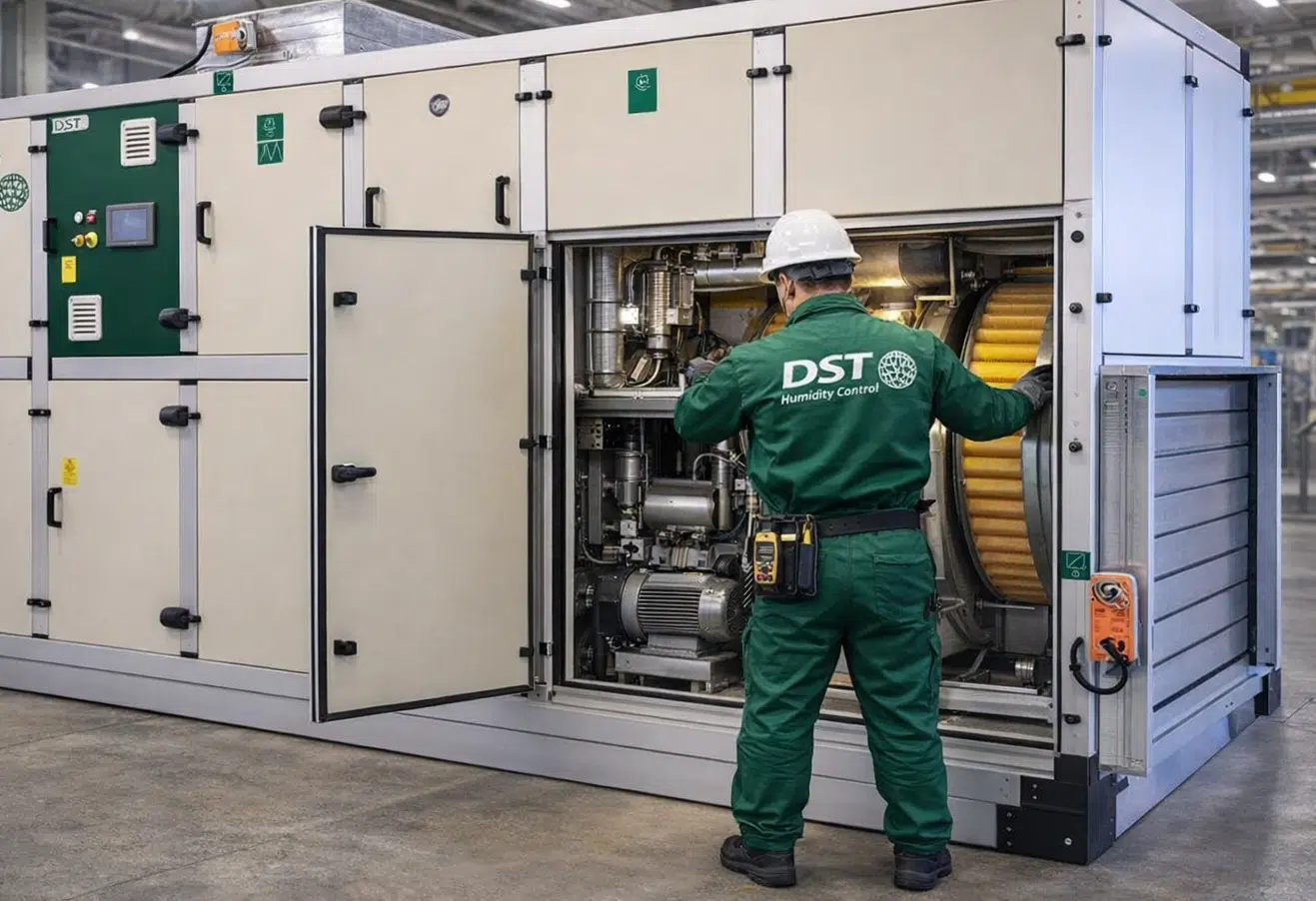
The rotor is the part that takes the moisture. DST bonds the silica gel into the rotor structure. The published D-Max notes cover washability, dust and how the rotor behaves in saturated air.
Read about the D-Max rotor
The names used when temperature and water vapour are calculated together: dry bulb, wet bulb, dew point, relative humidity and the rest of the set.
Read the definitions
The same properties drawn so a condition can be read from the chart, and a process line can be followed from the air you have to the air you need.
Read about the chart
A cooling dehumidifier condenses moisture and loses performance as the air gets cooler. A desiccant unit is used where the dew point, or the room temperature, is beyond that.
Compare the two
Moisture shows up as condensation, corrosion, a change in the product, or a store that no longer matches its spec. The page sets out those reasons.
Read why humidity is controlled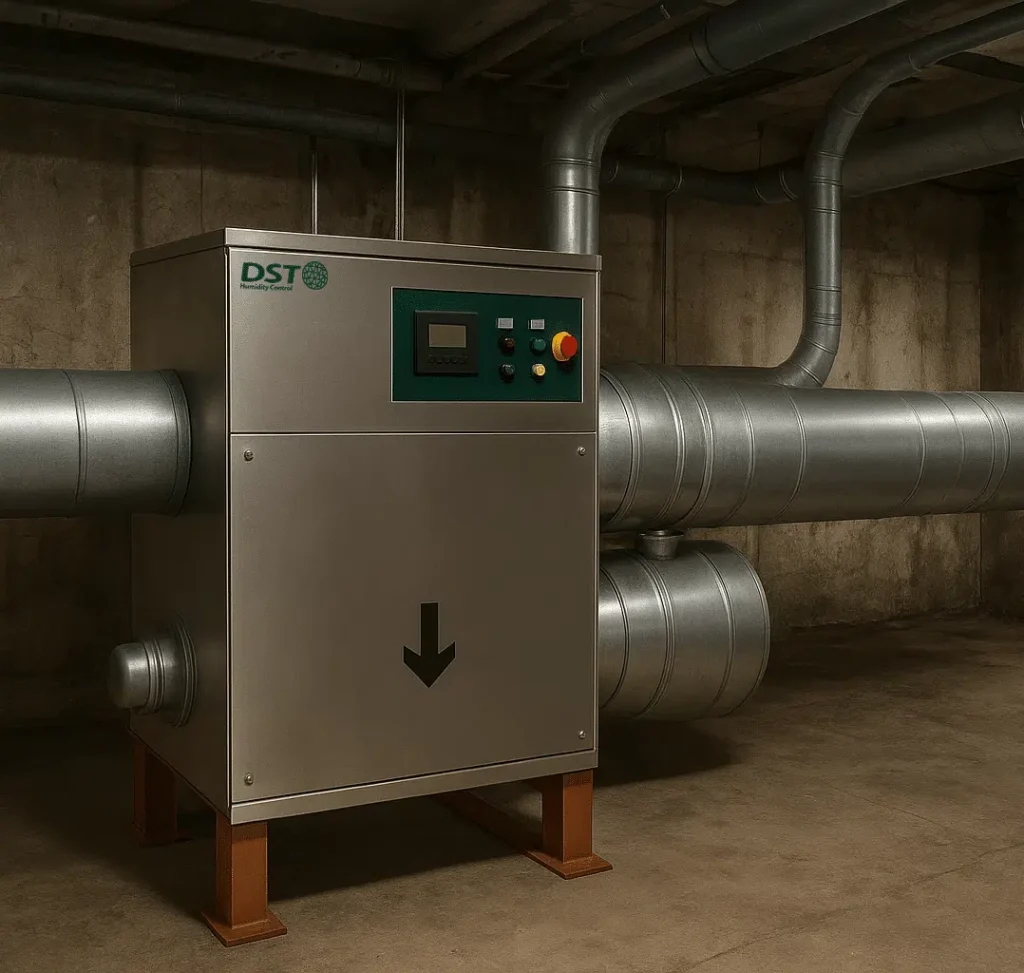
How stand-alone DST units are connected: process air in, dry air out, and the wet regeneration air taken away.
See installation examples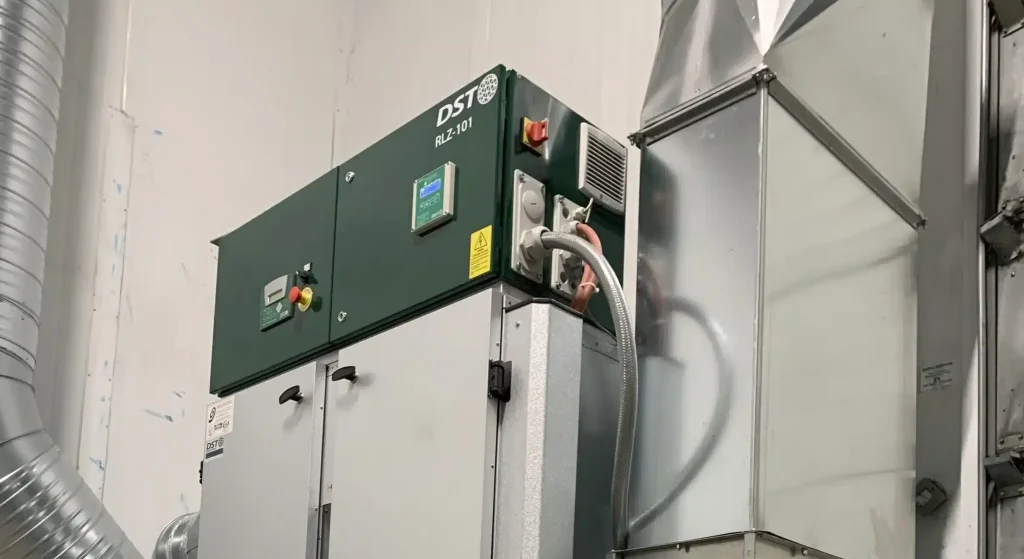
How a desiccant dehumidifier works. Process air passes through the rotor and leaves drier. A separate air stream is heated and drives that moisture back off the rotor.
Read how a desiccant unit worksDST desiccant units are built on one of three published airflow principles. The rotor is the same idea in each. What changes is how the regeneration air is handled.

A single fan and a fixed regeneration airflow. Used where that simple arrangement matches the duty.
Heat recovery on the regeneration side, so heat from the wet air is used again.
Consorb airflow plus an air-cooled condenser, so moisture in the wet air condenses where a wet-air duct is impractical.
These pages describe the method. A quote or a hire is a separate conversation, matched to the site.
Describe the space, the temperature and any humidity target you already have.
Ask about a dutyDST supply, with the range selected against the duty.
Go to dehumidifier salesOur office number is 01422 312 562, Monday to Friday, 8.30am to 5.00pm.
Call 01422 312 562The study of air and the water vapour mixed with it. The definitions and the chart are the working tools: temperature, humidity and dew point, read together.
The silica gel rotor fitted to DST industrial dehumidifiers. The silica gel is chemically bonded to the rotor. DST publishes that the rotor can be washed, and that it is not affected by saturated air in the way a lithium chloride rotor was.
A cooling unit condenses moisture and loses performance as conditions get cooler. A desiccant unit is used where the required dew point, or the air temperature, is outside what cooling can hold.
Temperature, the space, and any humidity or dew point you already know.
Or call 01422 312 562
Monday to Friday, 8.30am to 5.00pm