

What humidity does to artworks
As humidity rises, materials expand. As it falls, they shrink. Oil layers can crack or lift. Wooden panels warp. Works on paper distort or stain. High moisture also encourages mould.
Applications
Paintings, prints, sculpture and mixed media respond to humidity. Canvas, timber, paper and adhesives expand and contract as the air changes. Desiccant drying is used where a gallery needs stable moisture control through loans, busy openings and cooler display rooms.
Hygroscopic materials
Canvas, wood, paper and natural pigments take up and give back moisture as the room changes.
Stability first
Rapid swings stress a work more than a slow, small drift. The aim is a steady room.
Loans and visitors
Temporary shows and busy galleries raise the moisture load from people and equipment.
Desiccant method
A silica gel rotor removes vapour across a wide temperature band, including cooler spaces.
Damage is often gradual. Cracking, warping, staining and mould appear after repeated cycles of wet and dry air.
As humidity rises, materials expand. As it falls, they shrink. Oil layers can crack or lift. Wooden panels warp. Works on paper distort or stain. High moisture also encourages mould.
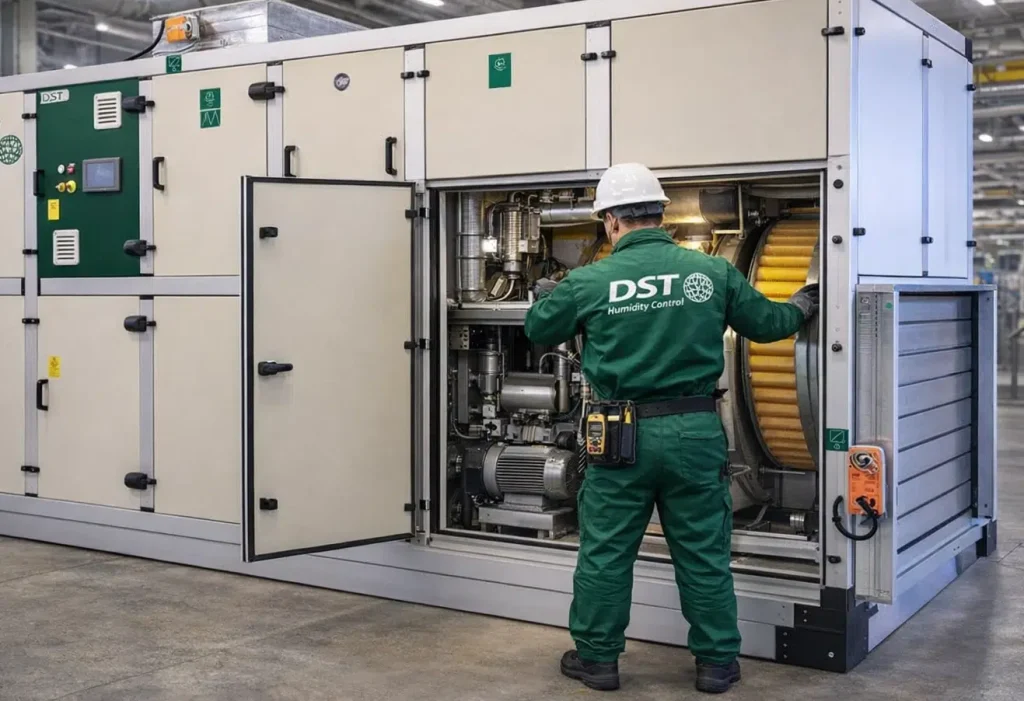
Historic paintings often combine canvas, ground and paint with different expansion rates. Photographs and paper are especially vulnerable. Acrylic and mixed media still include moisture-sensitive parts.
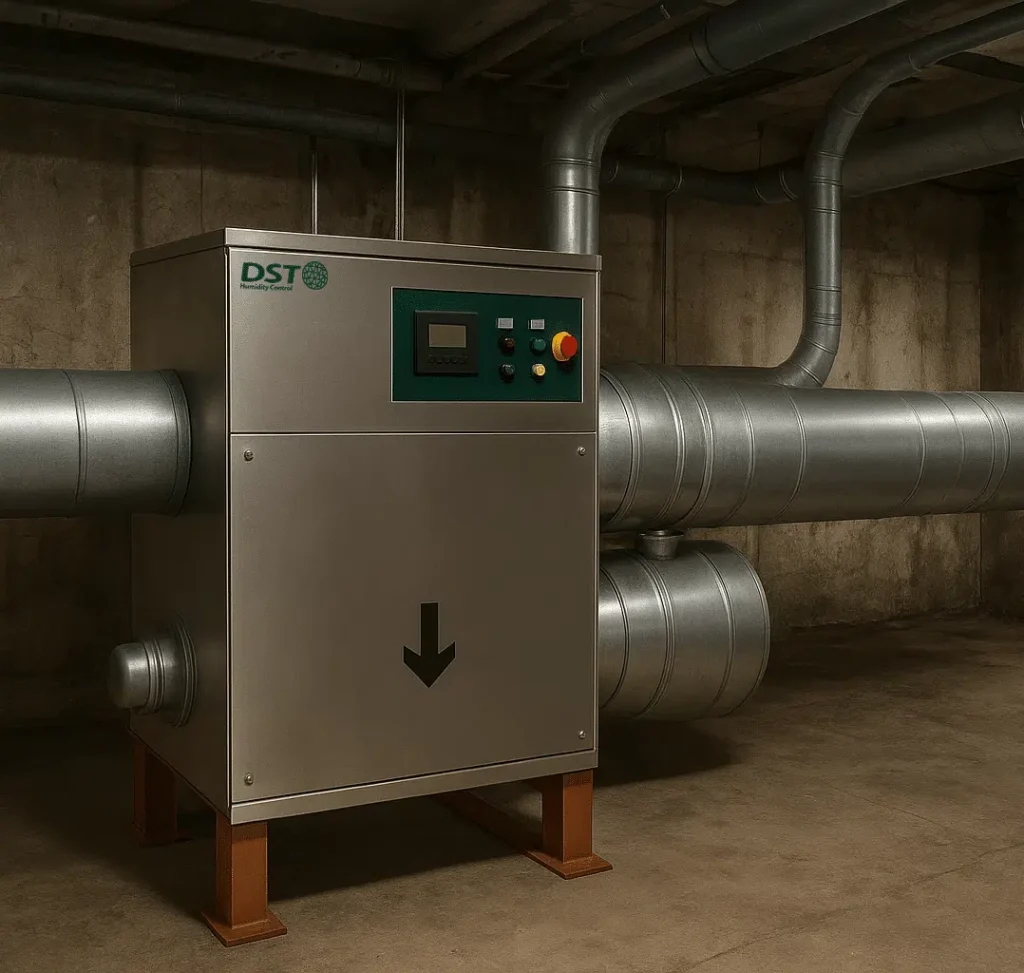
Process air passes a desiccant rotor and leaves drier. Wet regeneration air is ducted away. Units can stand alone or feed the gallery air system, including temporary cover during building works.
These notes describe the application. A sale or a hire is a separate conversation, matched to the site.
Describe the space, the temperature and any humidity or dew point you already know.
Get adviceCollections of objects, archives and textiles face the same need for stable air.
Read about museumsOur office number is 01422 312 562, Monday to Friday, 8.30am to 5.00pm.
Call 01422 312 562Conditions are specified for the gallery and the works on display. Stability through the day and the season usually matters more than a single figure.
Cooling units lose performance as the air temperature falls. Desiccant units continue to remove moisture where the room is cold or the required condition is outside the range of a refrigerant unit.
Yes. Higher visitor numbers and temporary displays change the moisture load. Capacity is sized from the space, opening hours and any loan conditions already in place.
Tell us about the space, the temperature, and any humidity or dew point you already know.
Or call 01422 312 562
Monday to Friday, 8.30am to 5.00pm