

Skip to content

DST desiccant range

Flexisorb dehumidification systems

A Flexisorb is a custom system built around the desiccant rotor, on the Recusorb or the Consorb principle. DST publishes process airflows up to 60,000 m³/h, and dew points down to minus 60°C in a single pass with the D-Max rotor.

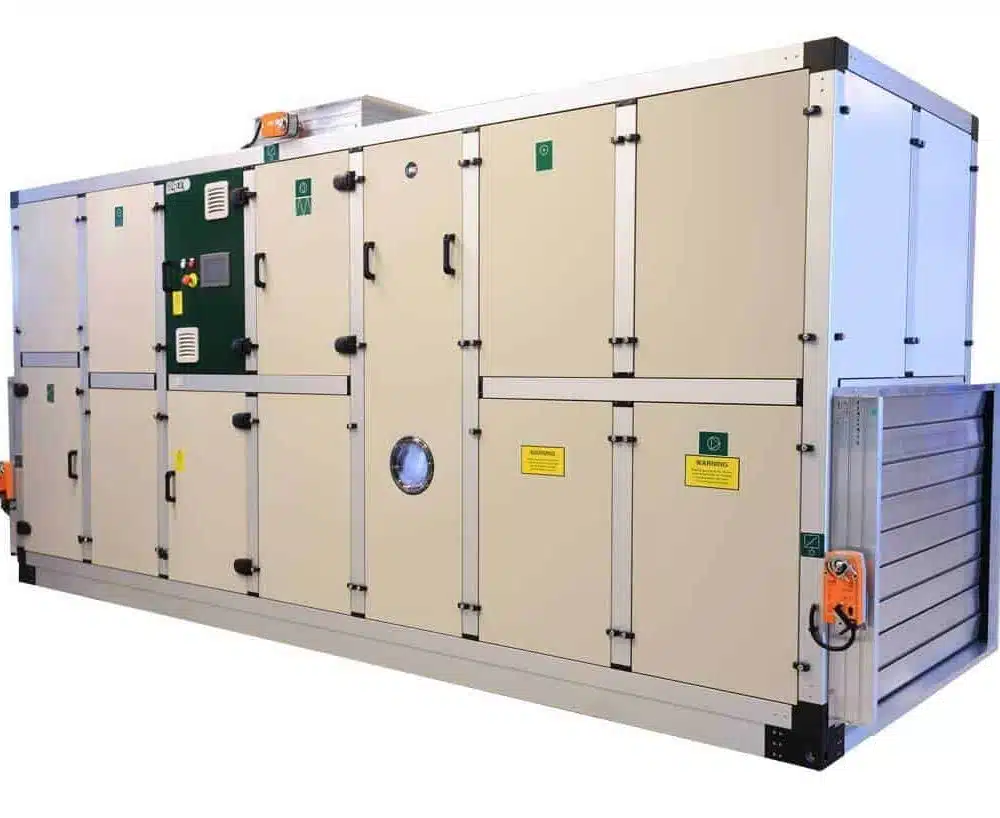
Large beige DST dehumidifier, marked DST 3250, with access doors and a duct connection
  • Built to the duty

    The rotor is the centre of the unit. Coils, filters and heaters are added for that job, not as a fixed catalogue layout.

  • 60,000 m³/h

    DST’s published upper figure for process airflow on a Flexisorb system.

  • Minus 60°C

    DST publishes that dew point in a single pass with the D-Max silica gel rotor. The SZCR zeolite rotor is for dew points lower than that.

  • The heaters

    Natural gas, LPG, steam, hot water or electricity, or a combination of two of those.

What is built into a Flexisorb

Drying the air is the job. Pre-cooling, post-cooling and post-heating are added when the supply-air temperature has to be controlled as well.

Schematic of a Flexisorb air path, with a vertical rotor and filters, coils and fans on either side

The air path

Incoming air can be filtered and pre-cooled before it meets the rotor. After the rotor, post-heating or post-cooling sets the temperature of the dry air that is supplied. The wet regeneration air leaves on its own duct. The drawing shows that arrangement: the rotor in the middle, with coils, filters and fans on either side.

See all desiccant ranges
Large beige DST dehumidifier, marked DST 3250, with access doors and a duct connection

RF and CF

DST builds Flexisorb as RF or CF. RF follows the Recusorb principle, with heat recovery inside the rotor. CF follows the Consorb principle, with one fan and a fixed regeneration airflow.

  • RFRecusorb heat recovery
  • CFConsorb airflow

The photograph is one modular cabinet, marked DST 3250. It is not a drawing of every layout.

Read the desiccant principles
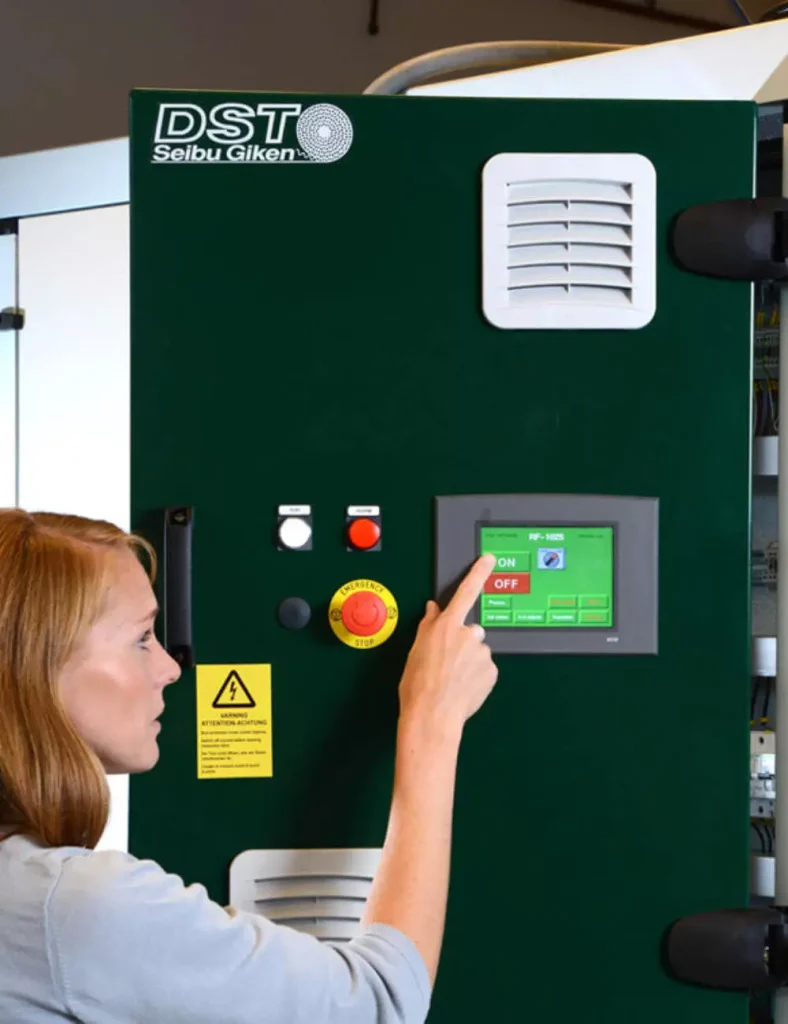
Person pressing the touchscreen on a green DST Seibu Giken panel. The screen reads RF-102S

Supplied as one unit

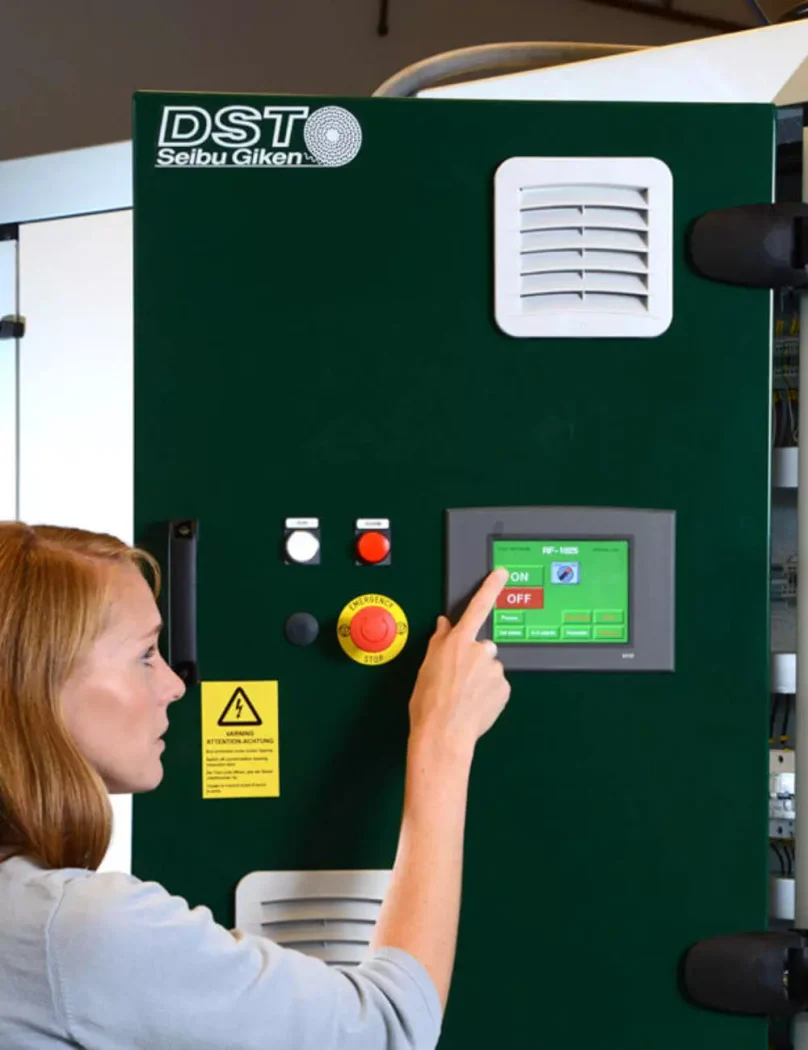
The dehumidifier, the coils and the panel are delivered together. Installation and commissioning stay with one supplier. The screen in this photograph reads RF-102S.

Read about the D-Max rotor

When Flexisorb is the range

Use it when the process needs a built air-treatment system, not a single packaged dehumidifier. An RLZ can take bolt-on Flex modules. A Flexisorb is the full system from the start.

Person pressing the touchscreen on a green DST Seibu Giken panel. The screen reads RF-102S
  • Low dew point

    The minus 60°C figure is the published single-pass result with D-Max. DST states that the SZCR zeolite rotor goes lower, and that it needs a higher reactivation temperature.

  • Temperature as well as humidity

    Pre-cooling reduces the load on the rotor. Post-heating and post-cooling are there when the dry air also has to leave at a set temperature.

  • The rotor

    D-Max is standard. DST states that the silica gel is chemically bonded, that there is no desiccant carry-over, and that the standard rotor can be washed. DST describes it as non-flammable to ASTM E84, and as bacteriostatic and fungistatic. SSCR-H is the variant that is not washable.

Next step

  1. The two layouts inside it

    Recusorb recovers heat in the rotor. Consorb is the simpler single-fan layout.

    Open Recusorb dehumidifiers
  2. All of the desiccant ranges

    Flexisorb sits with RLZ, R and RL, and the smaller DC, DR and Aquasorb units.

    Open desiccant dehumidifiers
  3. Buying in the UK

    Newsome supplies the DST range. Describe the airflow, the dew point and whether the supply air also has to be heated or cooled.

    Go to dehumidifier sales

Questions

Is minus 60°C the figure for every DST dehumidifier?

No. DST publishes dew points down to minus 60°C in a single pass for Flexisorb with the D-Max rotor. Other ranges are chosen for the dew point the process needs.

What is the difference between RF and CF?

RF is built on the Recusorb principle, with heat recovery in the rotor. CF is built on the Consorb principle, with one fan and a fixed regeneration airflow.

What regeneration heaters are published?

Natural gas, LPG, steam, hot water or electricity, or a combination of two of those.

Ask about a Flexisorb

Give the airflow, the dew point or humidity, and whether the supply air also has to be heated or cooled. Choose Purchase equipment to buy.

Or call 01422 312 562

Monday to Friday, 8.30am to 5.00pm