
Condensation
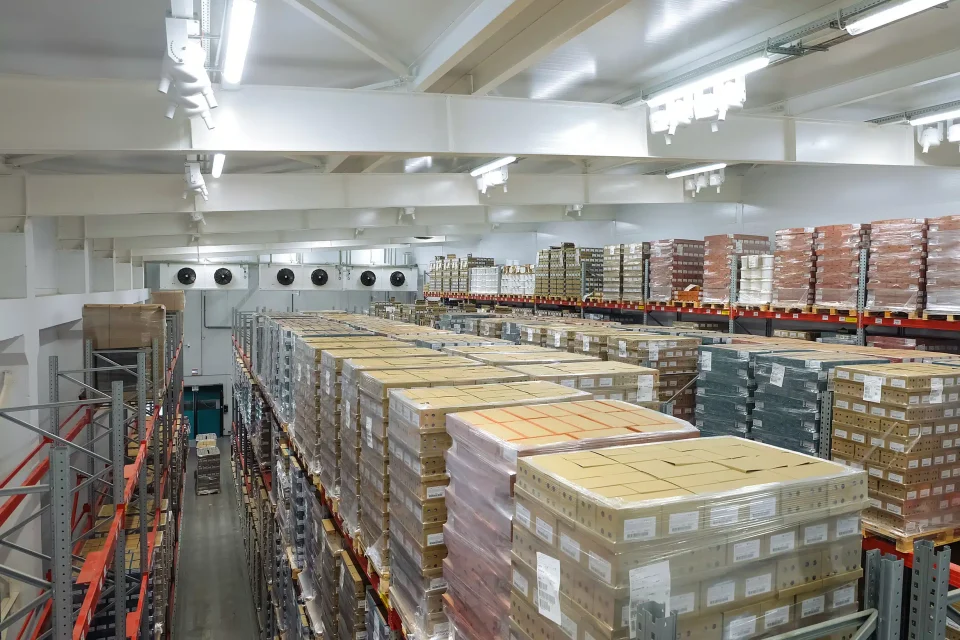
Warm, damp air meeting cold surfaces. It shows up in cold stores, ice rinks and buildings that are hard to keep dry, and it can drip, fog or wet the product.
Discuss condensationDST industrial dehumidifiers
We supply, hire and support DST desiccant dehumidifiers for UK factories, stores and process areas. If condensation, moisture damage, corrosion or drifting conditions are affecting a building or a process, choose the route below and we will help you work out a suitable next step.
UK partner of Seibu Giken DST AB
DST dehumidifiers are supplied in the UK through Newsome.
DST equipment for the UK market
The published partnership covers exclusive UK supply of DST dehumidification equipment.
Working with UK industry since 1973
Newsome has provided environmental control for more than 45 years, including humidity control alongside heating and cooling.
Offices in Elland and Basingstoke
Head office in West Yorkshire and a south of England sales office. Monday to Friday, 8.30am to 5.00pm.
Industrial dehumidifier sales, hire and servicing each have their own page. Tell us whether you want to buy, hire, look after equipment you already have, or get help deciding.
Buy a DST dehumidifier for a permanent installation. We help match the equipment to the building and the moisture problem before anything is ordered.
Go to dehumidifier salesShort- or long-term rental for a season, a project, a trial or an urgent moisture problem, without committing to a permanent system.
Go to dehumidifier hireScheduled servicing for dehumidifiers already on site, plus installation, maintenance and repairs through the wider services pages.
Go to dehumidifier servicingNot sure which range to look at, or whether hiring or buying is the better fit. Describe the space and we will help you narrow it down.
Get help choosingThese are typical reasons people get in touch. The right response depends on the building, the process and the moisture load. None of them is a one-size fix.
Warm, damp air meeting cold surfaces. It shows up in cold stores, ice rinks and buildings that are hard to keep dry, and it can drip, fog or wet the product.
Discuss condensation
Goods, packaging and finishes taking on moisture: mould, sticking, sugar bloom, clumping or warping in stores and production areas.
Discuss moisture damage
Rust on steelwork, tooling, stored plant and equipment when humid air sits on metal. Published examples include bridges, ships, turbines and plant during shutdown.
Discuss corrosion
Humidity moving with the weather, with door openings or with the process itself, so quality or the working environment is hard to hold steady.
Discuss unstable conditionsThese are the families published for DST industrial equipment. They are different designs, not one machine in several sizes. We do not suggest a model until the duty is understood, and capacity figures are left for that conversation.
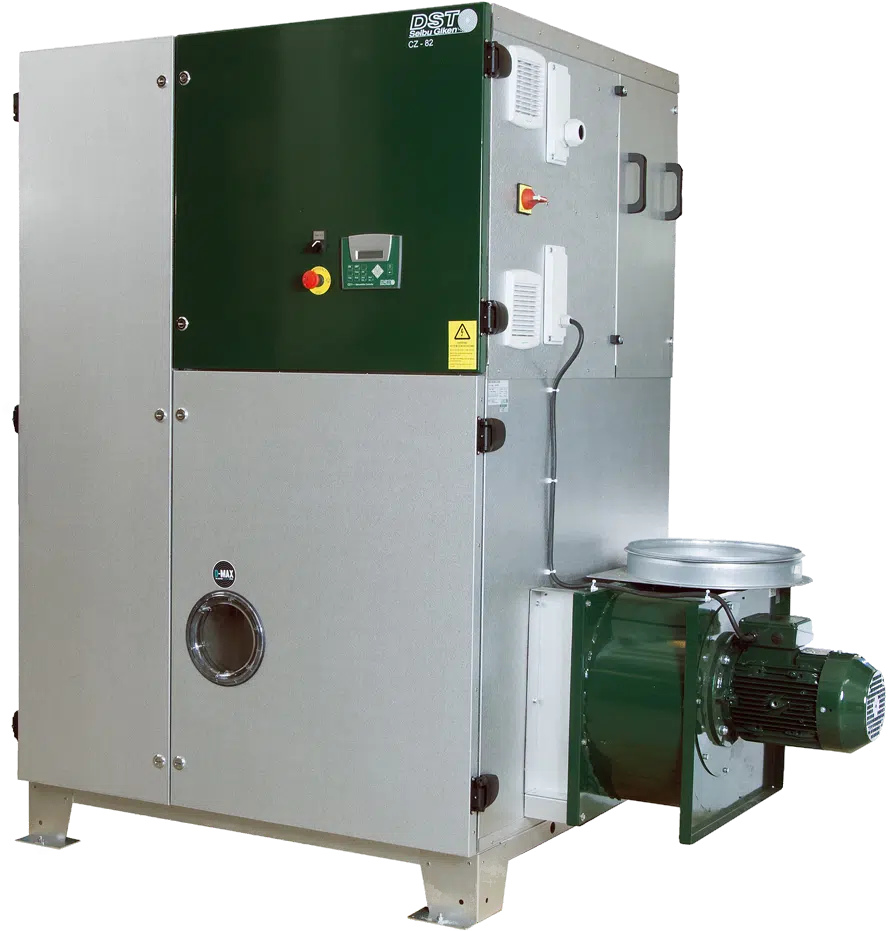
The photograph shows a Consorb CZ-82. Consorb uses one fan and a fixed regeneration airflow. Published guidance places it where the moisture load is steady, including cooler spaces where a refrigerant dehumidifier loses performance.
Discuss Consorb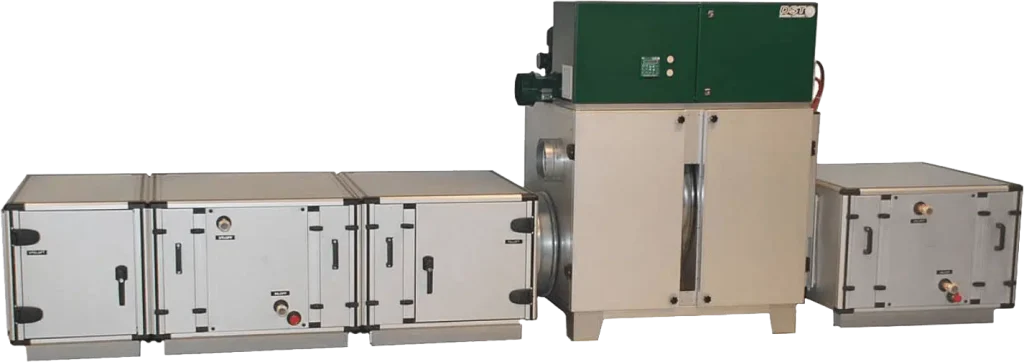
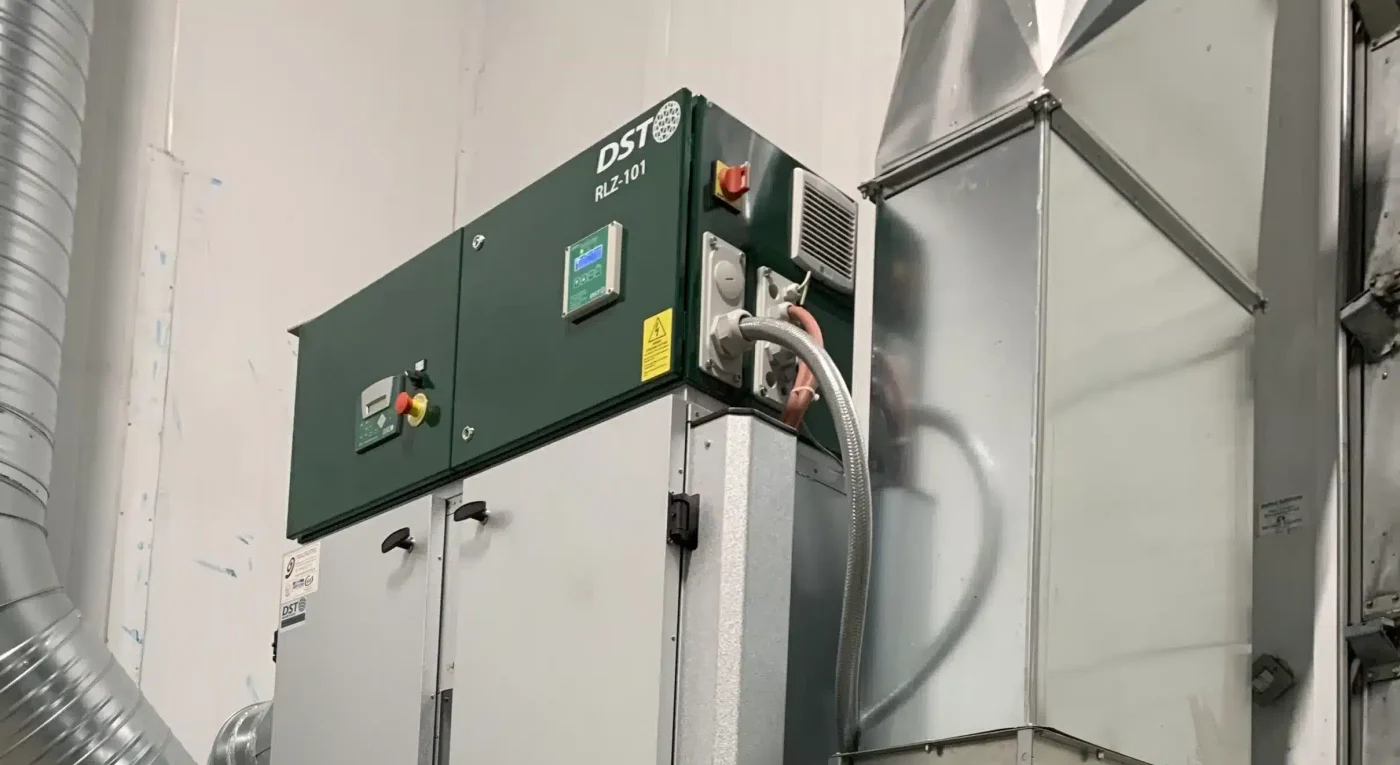
The photograph shows an RZ-101 with air-handling modules. Recusorb equipment, including the published R, RL and RLZ descriptions, uses heat recovery. That suits duties where the moisture load changes. It is not a larger Consorb.
Discuss Recusorb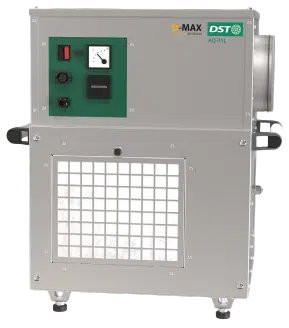
The photograph shows an Aquasorb AQ-31L. It is the Consorb layout with an air-cooled condenser, so moisture can be drained where a wet-air duct is impractical. DST states that the energy put in ends up in the dry-air outlet.
Discuss Aquasorb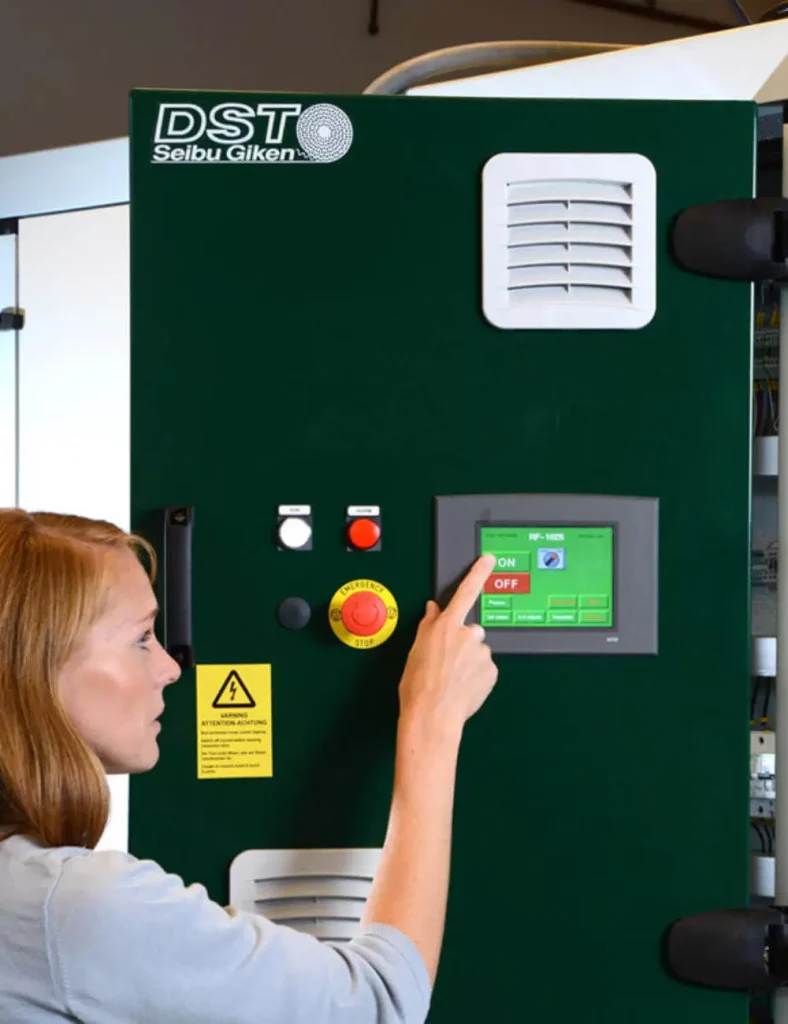
Flexisorb systems are built around the DST rotor and can follow the Consorb or Recusorb principle, with modules for heating, cooling or filtration. They are for process work that needs a built system. The photograph shows a DST Seibu Giken control cabinet, not every module layout.
Discuss Flexisorb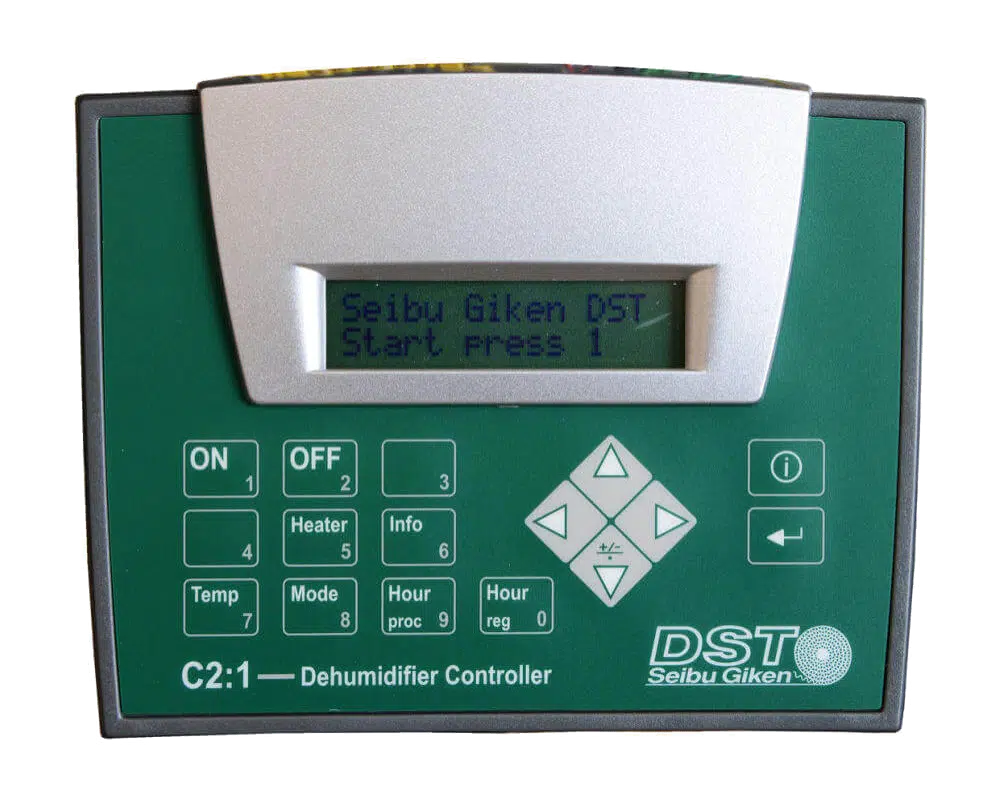
The photograph is the C2:1 dehumidifier controller. Published options also include the EH3 and EH4 controllers, for stepped control or, where specified, a building-management signal. The controller is part of the specification, not a default.
Discuss controlsA short set of applications from the current DST site. Each one links to a fuller note on the moisture problem and how desiccant drying is used.
Steam, wash-down and outside air can leave a factory damp enough to wet product, machinery and the work itself.
Read about factoriesWarm air at a doorway turns to fog, ice and condensation. Desiccant drying is used because refrigerant dehumidifiers struggle in the cold.
Read about cold storesStored goods, packaging and racking pick up moisture as doors and the weather change. Heating on its own does not hold humidity steady.
Read about warehousesPublished examples include confectionery, where sugar and chocolate take on moisture, and chilled meat areas where condensation affects hygiene.
Read about confectioneryPowders and tablets absorb moisture. Published notes point to dry, cool rooms and to treating fresh air before it enters the process.
Read about pharmaceuticalsPaintings, paper, textiles, wood and metals are harmed when humidity swings. The aim is a stable room, not a single number for every object.
Read about museumsBuying or hiring a dehumidifier is only part of the job. Selection, installation and looking after the unit are what decide whether the room stays in the condition you need.
We start from the space, the moisture source and whether you need industrial dehumidifier sales, hire or servicing for something already installed. Consorb, Recusorb, Aquasorb and Flexisorb are different machines.
The equipment is manufactured by Seibu Giken DST. Newsome supplies it in the UK, from the Elland head office and the Basingstoke sales office.
Published services cover installation, commissioning, planned maintenance, repairs and industrial dehumidifier servicing. A site survey can be arranged where the application needs one. We do not publish a response time or a survey fee here.
A short sequence. Nothing here is a promise of a visit, a price or a delivery date.
What the building or process is, what is going wrong, and whether you want to buy, hire or service equipment you already have.
Which family of equipment is worth discussing, or whether looking after the existing plant is the better route. If we need more detail, we will say so.
That may be a recommendation to talk through, a hire, or a site survey where the application needs one. Timing and cost are confirmed for that job, not assumed in advance.
Straight answers from the information already published. Where a number or a model depends on the site, we say that it needs the engineering team.
We start from the space, where the moisture is coming from, and what has to stay stable. Consorb, Recusorb, Aquasorb and Flexisorb are different designs. Capacity and the exact model need site information, so we do not publish a rule that one unit suits every building.
Industrial dehumidifier hire is there for seasonal demand, an urgent problem, a trial or a project. Purchase is for a system you expect to keep. Open the hire or sales page for that route, or choose “Help choosing a solution” on the form if you are unsure. We will not assume one is cheaper.
Your name, company and email, the type of requirement, and a short description of the building or process. A phone number helps but it is optional. Drawings, photographs and any humidity readings you already have are useful. You do not need them to start.
Installation, maintenance, repairs and industrial dehumidifier servicing are published services. Start on the servicing page for a scheduled visit, or the services hub for the wider programme. Tell us the make and model if you know them.
No. DST publishes the difference between refrigerant dehumidifiers, which lose performance as the air gets colder, and desiccant units, which keep drying at low temperature. Tell us the temperatures you work at and what is going wrong. If a desiccant unit is the wrong conversation, we would rather say so.
Send a short note with the form, or call during the published opening hours. Please do not include card numbers or other sensitive information.
Or call 01422 312 562
Monday to Friday, 8.30am to 5.00pm